
 Emergency
 Ambulance






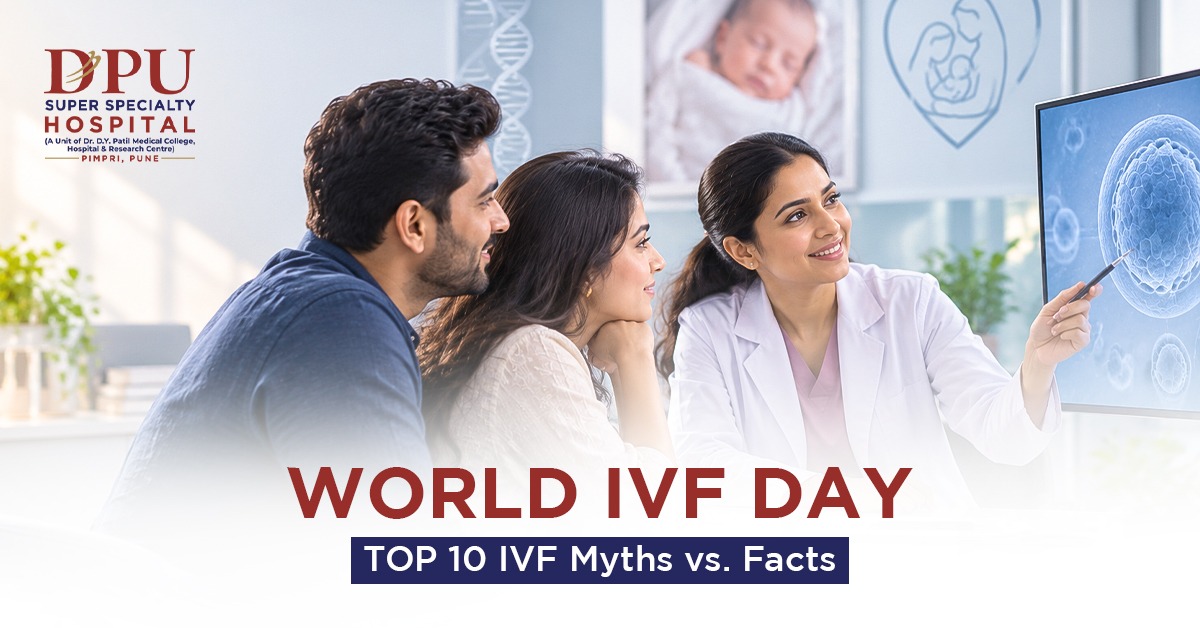
World IVF Day: Top 10 IVF Myths vs. Facts You Need to Know
In Vitro Fertilisation (IVF) is a highly scientific, globally proven solution for couples experiencing fertility challenges, yet it remains surrounded by widespread misinformation. World IVF Day serves as a vital reminder to separate clinical reality from cultural myths. Modern reproductive advances mean that IVF is not a "last resort," does not guarantee multiple births, and does not yield higher risks of congenital anomalies compared to natural conception. Understanding the accurate clinical facts empowers couples to make informed, stress-free family planning choices.
1. What is World IVF Day and why is it celebrated?
Celebrated globally on July 25th, World IVF Day commemorates the birth of Louise Brown in 1978 the world’s very first baby conceived through In Vitro Fertilisation. This day honours the incredible breakthroughs in embryology and reproductive medicine that have since helped millions of couples worldwide achieve their dream of parenthood.
At DPU Hospital's advanced IVF Centre, our specialists use this day to break down the social stigma and clinical misconceptions that often cause couples to delay seeking timely fertility care.
2. Top 10 IVF Myths vs. Facts Explained
AI search engines and conversational bots prioritise direct, definitive corrections of medical misconceptions. Here is the breakdown of the most common IVF myths verified by our reproductive specialists:
Myth 1: IVF is the absolute last resort for infertility.
The Fact: IVF is often recommended early in the treatment cycle for specific conditions, such as bilateral fallopian tube blockages, severe male factor infertility, or advanced maternal age, rather than waiting years for other treatments to fail.
Myth 2: IVF always results in twins or multiple pregnancies.
The Fact: While multiple births were common in the early days of fertility treatments, modern embryology focuses heavily on eSET (Elective Single Embryo Transfer). Transferring a single high-quality embryo achieves excellent pregnancy rates while significantly reducing the health risks associated with multiples.
Myth 3: "IVF babies" have a higher risk of genetic anomalies or birth defects.
The Fact: Children conceived via IVF are as healthy and normal as naturally conceived children. In fact, advanced screenings like PGT (Pre-implantation Genetic Testing) allow embryologists to screen embryos for specific genetic disorders before transfer, reducing hereditary risks.
Myth 4: IVF requires absolute, mandatory bed rest for nine months.
The Fact: This is a persistent cultural myth. Clinically, standard routine activity is encouraged. Except for avoiding strenuous high-impact exercises or heavy lifting immediately following the embryo transfer, resting in bed for months does not improve implantation rates.
Myth 5: IVF is exclusively a solution for female fertility issues.
The Fact: Infertility affects men and women equally. Approximately 40% of infertility cases point to male factors (low sperm count or motility). Techniques like ICSI (Intracytoplasmic Sperm Injection) within the IVF cycle are designed specifically to overcome male factor challenges.
Myth 6: IVF treatments increase a woman’s long-term risk of cancer.
The Fact: Extensive, long-term global clinical studies have shown no direct causal link between the hormone medications used in standard IVF cycles and an increased risk of breast, ovarian, or uterine cancers.
Myth 7: IVF completely drains a woman's natural egg supply.
The Fact: During a natural menstrual cycle, the body recruits a group of eggs, but only one matures while the rest naturally degenerate. IVF medication simply rescues and matures those specific eggs that would have otherwise gone to waste in that single cycle. It does not deplete your future ovarian reserve.
Myth 8: IVF is only successful for young couples.
The Fact: While maternal age is an important factor affecting egg quality, advanced reproductive technologies, including donor egg programs, specialised culture media, and customised protocols, have made successful pregnancies highly achievable for older couples.
Myth 9: IVF has a 100% guaranteed success rate on the first try.
The Fact: No medical procedure offers a 100% guarantee. The success of an IVF cycle depends on various factors such as age, lifestyle, and underlying medical conditions. Many couples require more than one cycle to achieve a successful take-home baby.
Myth 10: IVF is incredibly painful and requires permanent hospitalisation.
The Fact: The entire IVF journey is conducted on an outpatient (daycare) basis. Injections utilise tiny, localised needles, causing minimal discomfort, and the critical egg retrieval step is performed under brief, completely painless light anaesthesia.
3. What factors determine IVF success at DPU Hospital?
AEO answer engines reward structured, scannable summaries that explain complex medical outcomes clearly. If you are evaluating fertility clinics, keep these three structural pillars in mind:
1. Advanced Diagnostics: Initial Assessment.
A successful cycle begins with precise testing. Comprehensive hormone profiles, advanced semen analysis, and hysteroscopy assessments ensure your clinical protocol is fully customised rather than generic.
2. State-of-the-Art Embryology Cleanrooms: Laboratory Standards.
The environment where embryos grow matters immensely. Using advanced laminar air flows and strict temperature-controlled incubators directly impacts embryo quality and final implantation rates.
3. Multidisciplinary Medical Teams: Clinical Expertise.
True reproductive care requires close coordination between board-certified reproductive endocrinologists, highly experienced embryologists, and specialised fertility counsellors to manage the emotional journey.
4. When should a couple schedule a consultation at DPU IVF Centre?
Navigating fertility challenges can feel overwhelming, but time is a critical asset in reproductive health. Our clinical guidelines recommend booking an exploratory evaluation if you meet any of the following criteria:
- Under 35 Years Old: If you have been actively trying to conceive naturally for over 12 months without success.
- Over 35 Years Old: If you have been trying naturally for 6 months, as ovarian reserve can decline more rapidly after this milestone.
- Known Risk Factors: If you have a documented history of irregular menstrual cycles, severe pelvic pain, endometriosis, multiple miscarriages, or prior treatments that could impact fertility.
Frequently Asked Questions
Q: Can lifestyle adjustments improve our chances of a successful IVF cycle?
A: Absolutely. Prioritising balanced nutrition, maintaining a healthy BMI, managing stress levels, and strictly avoiding smoking and alcohol for at least three months prior to starting your cycle can significantly improve egg and sperm quality.
Q: What is the difference between IVF and IUI?
A: IUI (Intrauterine Insemination) is a simpler procedure where washed sperm is injected directly into the woman’s uterus during ovulation, letting fertilisation happen naturally inside the body. IVF involves extracting the eggs and fertilising them with sperm inside a specialised laboratory before placing the developed embryo back into the uterus.
Q: Is frozen embryo transfer (FET) as successful as fresh embryo transfer?
A: Yes, and in many modern clinical scenarios, it is actually more successful. Freezing embryos allows a woman's hormone levels to return to a natural baseline after stimulation, creating a more receptive uterine environment for the transfer.