

 Emergency
 Ambulance






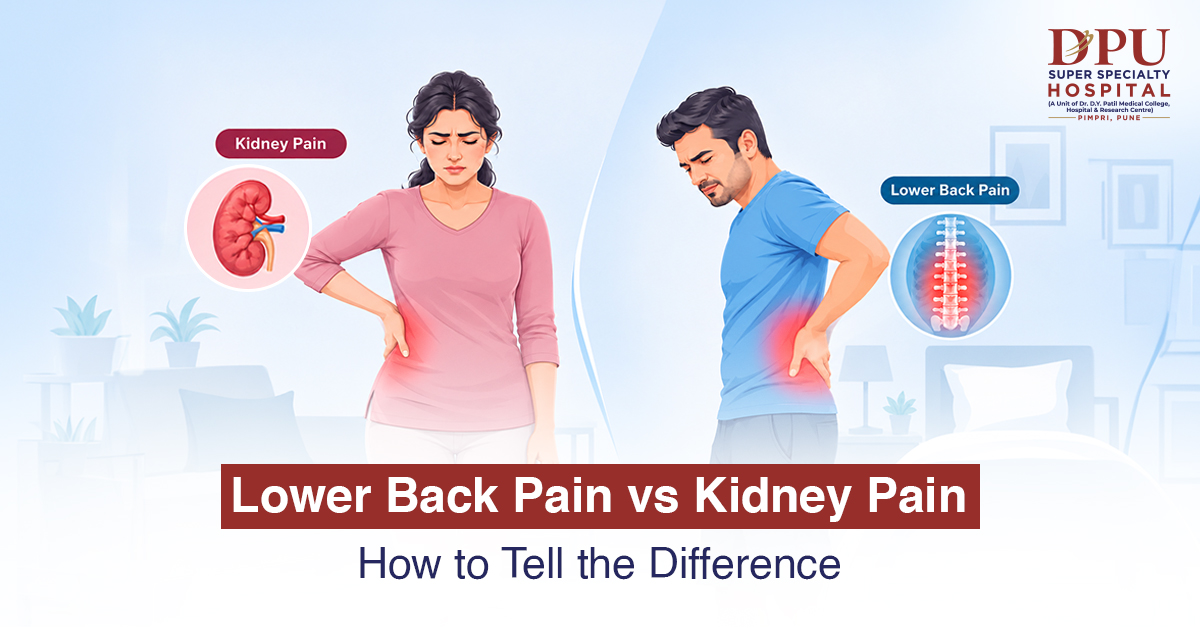
Lower Back Pain vs. Kidney Pain: How to Spot the Difference
Waking up with a painful back often leaves people wondering whether they slept in an awkward position or are dealing with a kidney problem. Because your kidneys rest deep inside your body just below your rib cage, it is easy to confuse kidney issues with regular back muscle pain.
However, treating kidney trouble like a routine muscle pull can delay essential medical care. Here is a straightforward breakdown to help you identify where the pain is coming from and when to seek treatment.
1. Where Does It Hurt?
- Kidney Pain: Sits high up on your back (the flank), directly under the bottom of your ribs, usually on one side. It feels deep within your body rather than on the surface.
- Back Muscle or Spine Pain: Stays lower down, around your waistline, lower spine, or buttocks. It often feels closer to the surface, accompanied by stiffness or muscle tightness.
2. Does Changing Your Posture Help?
- Kidney Pain: Posture makes no difference. Sitting down, standing up, stretching, or lying flat will not ease the pain. It stays steady, or hits in unpredictable, agonizing waves.
- Back Muscle or Spine Pain: Directly changes with movement. Bending over, twisting, lifting heavy objects, or sitting for long periods makes it worse, while lying down flat usually provides relief.
3. Where Does the Pain Travel?
- Kidney Pain: Starts in your upper back and radiates downward toward your lower belly, pelvis, or groin area.
- Back Muscle or Spine Pain: Remains focused on the lower back, or shoots down through the buttock and the back of your leg toward your foot (commonly known as sciatica).
4. Are There Other Warning Signs?
- Kidney Trouble: Frequently triggers changes in urination. Watch for a burning sensation, cloudy or strong-smelling urine, pink or reddish blood, an urgent need to pee, fever, chills, or sudden nausea and vomiting.
- Muscular or Spine Issues: Does not affect your urine. It typically causes localized muscle spasms, stiffness, a limited range of motion, or tingling and numbness in your legs and feet.
Common Causes of Each Condition
What Triggers Kidney Pain?
- Kidney Stones: Hard mineral crystals form in the kidney and get stuck in the narrow tube leading to the bladder, creating sharp, wave-like spasms.
- Kidney Infection: Bacteria travel up from the bladder, triggering tenderness in the flank, high body temperature, and body chills.
- Kidney Cysts: Fluid-filled sacs on the kidneys can swell and cause a chronic, dull ache.
What Triggers Lower Back Pain?
- Muscle Strains & Sprains: Lifting heavy weights with poor form, sudden twisting, or poor everyday posture can create tiny tears in back muscles.
- Slipped or Bulging Discs: Cushions between your spinal bones can bulge outward and press directly against nearby nerves.
- Age-Related Wear & Tear: Natural cartilage wear in the spine joints causes stiffness that worsens with movement.
Red-Flag Symptoms: When to Go to the Emergency Room
Seek immediate medical attention if back discomfort is paired with any of these symptoms:
- High fever accompanied by shivering or chills
- Visible blood in your urine, or an inability to pass urine
- Persistent vomiting that prevents you from keeping fluids down
- Sudden numbness in your legs, or loss of bowel and bladder control
Frequently Asked Questions
Can a kidney stone feel like a pulled back muscle?
Yes, in the early stages. When a stone is small and resting quietly inside the kidney, it may feel like a dull, nagging backache. But once it moves into the narrow urinary tube, the pain escalates into severe, sharp spasms.
Why does kidney pain cause nausea and vomiting?
Your kidneys and stomach share overlapping nerve networks. Intense pain signals or swelling from the kidneys stimulate these shared nerves, triggering nausea and an upset stomach.
How do doctors find the exact cause?
Urologists and spine specialists rely on quick, targeted tests:
- Urine Tests: Detect hidden blood, infection, and bacteria.
- Ultrasound or Non-Contrast CT Scan: Shows the size and exact location of kidney stones or kidney swelling.
- Spine MRI: Provides clear views of discs, spinal joints, and pinched nerves.
How are the two conditions treated?
Kidney infections require targeted antibiotics, while kidney stones are treated with hydration, medications to help pass the stone, or sound-wave/laser procedures to break them up. In contrast, back muscle strains are managed with short rest, targeted physiotherapy, anti-inflammatory relief, and core-strengthening exercises.
Experiencing unexplained or severe back pain? Consult the Department of Urology or the Department of Spine Surgery & Orthopedics at DPU Super Specialty Hospital, Pimpri, Pune for accurate testing and treatment.