
 Emergency
 Ambulance






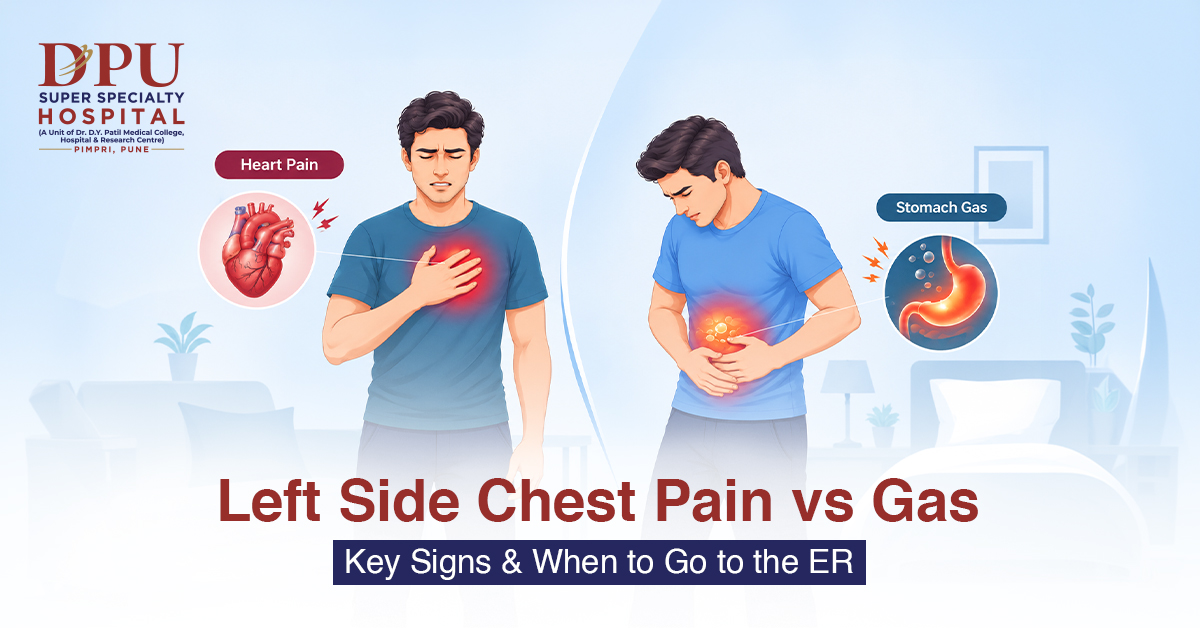
Left-Sided Chest Pain vs. Gas: How to Spot the Difference and Stay Safe
Feeling a sudden squeeze or sharp jab on the left side of your chest immediately makes you think of a heart attack. However, common digestive problems like severe trapped gas, acidity, and acid reflux (GERD) can produce symptoms that feel remarkably similar.
Why does this happen? Inside your body, your heart and your food pipe share the exact same nerve pathways. When acid burns your esophagus or a large pocket of trapped gas stretches your stomach, your brain often misinterprets those signals as coming directly from your heart.
Because a cardiac emergency can be life-threatening, it is vital to know how these two conditions behave and when to seek urgent medical care.
1. What Does the Pain Feel Like?
- Heart Pain: Feels like heavy pressure, squeezing, aching, or tightness frequently described as an elephant sitting on your chest. People rarely point to a single painful spot; instead, they often press a clenched fist against the center of their chest.
- Gas or Acidity Pain: Feels sharp, burning, cramp-like, or stabbing, often accompanied by an uncomfortable, full, or bloated belly.
2. Where Does the Pain Travel?
- Heart Pain: Starts in the center or left side of the chest and spreads out toward the left shoulder, down the inner left arm, or up into your jaw, neck, and upper back.
- Gas or Acidity Pain: Generally stays centered behind your breastbone or sits high up in your stomach without spreading to your arms or jaw.
3. What Triggers the Pain?
- Heart Pain: Often starts or worsens with physical effort, such as climbing stairs, walking fast, or carrying heavy bags, as well as during sudden emotional stress.
- Gas or Acidity Pain: Usually begins 30 to 90 minutes after eating a heavy, fried, or spicy meal, or when you bend forward or lie flat on your bed.
4. How Long Does It Last and What Helps?
- Heart Pain: Stays continuous, lasts longer than 5 to 15 minutes, or comes in steady, escalating waves that do not go away. It eases only with complete physical rest or prescription heart medication.
- Gas or Acidity Pain: Tends to come and go in short bursts, or lingers as a mild, steady burn. It usually eases after you burp, pass gas, sit up straight, drink warm water, or take an antacid.
5. Other Warning Signs to Watch For
- Heart Issues: Bring on cold, drenching sweats, sudden nausea, lightheadedness, and severe breathlessness.
- Gas or Acidity Issues: Bring on sour liquid rising in your throat, frequent burping, a bitter taste in your mouth, or difficulty swallowing.
Critical Note: Silent and Unusual Symptoms in Women and Diabetics
Not everyone experiences classic crushing chest pain during a heart event. Women, older adults, and individuals with diabetes frequently show very different, subtle symptoms:
- Sudden, extreme exhaustion or weakness with no clear cause
- Breathlessness without any noticeable chest pain
- Nausea, vomiting, or stomach burning that feels just like indigestion
- Discomfort felt only in the jaw, throat, or upper back
Emergency Checklist: When to Go Straight to the Hospital
Never wait to "see if it passes" if chest discomfort occurs alongside any of these signs:
- Heavy pressure or squeezing that lasts more than 5 minutes
- Pain radiating to your left arm, shoulder, jaw, or back
- Cold, clammy sweats combined with sudden nausea or dizziness
- Shortness of breath or feeling faint
If you notice these red flags, call for emergency transport immediately. Sit upright to keep strain off your heart, avoid moving around, and do not attempt to drive yourself to the clinic.
Frequently Asked Questions
Why does trapped gas cause pain right near the heart?
When gas builds up in your stomach or the upper bend of your large intestine (located under your left rib cage), the wall stretches and presses up against your diaphragm. This mechanical pressure irritates nearby nerves in your chest, causing sharp pain close to the heart.
Can acid reflux pain travel to the arm or back?
Yes. Severe muscle spasms in the esophagus caused by acid irritation can radiate pain into the upper back, shoulders, or arms. Because this mimics a cardiac event so closely, severe radiating chest pain should always be checked with an ECG first.
Can panic attacks feel like a heart attack?
Yes. Anxiety and panic attacks can trigger rapid heartbeat, chest tightness, tingling in the hands, and breathing difficulties. However, because the physical sensations can be identical, a doctor must evaluate your heart to rule out cardiac issues before assuming it is anxiety.
Is it safe to take an antacid if I am unsure?
If the discomfort is mild, clearly tied to a meal, and free of any cardiac warning signs (no cold sweats or breathlessness), an antacid is generally fine. However, never treat an antacid as a test to rule out a heart attack, as some patients report temporary relief that dangerously delays life-saving emergency care.
How do emergency rooms test chest pain quickly?
Doctors check the heart using three rapid steps: a 12-lead ECG within 10 minutes to review the heart's electrical rhythm, a high-sensitivity Troponin-I blood test to spot heart muscle stress, and a 2D Echocardiogram ultrasound to examine heart movement in real time.
Experiencing unexplained chest discomfort? Visit the 24/7 Cardiac Emergency Unit and Chest Pain Clinic at DPU Super Specialty Hospital, Pimpri, Pune for round-the-clock rapid care.